
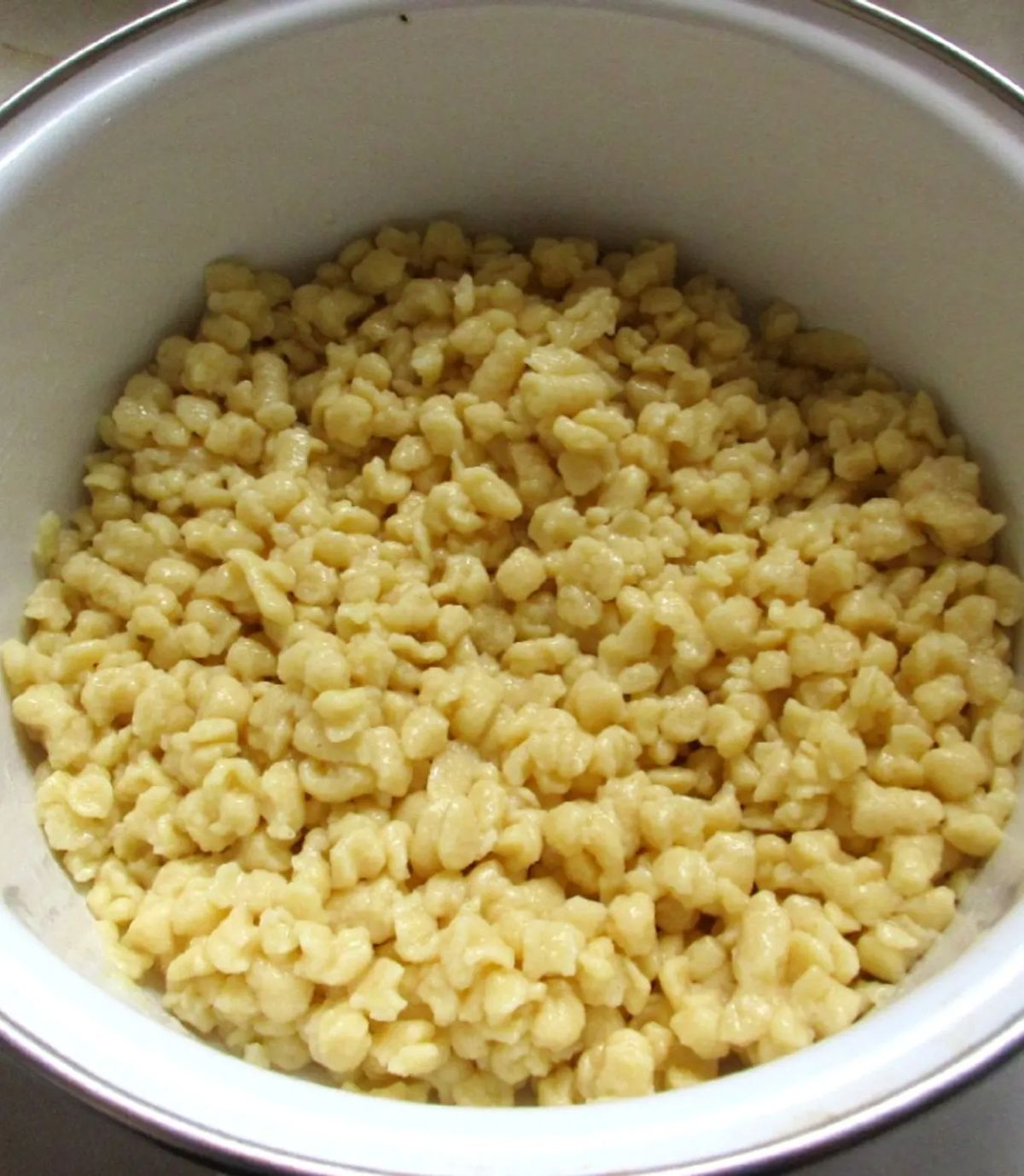
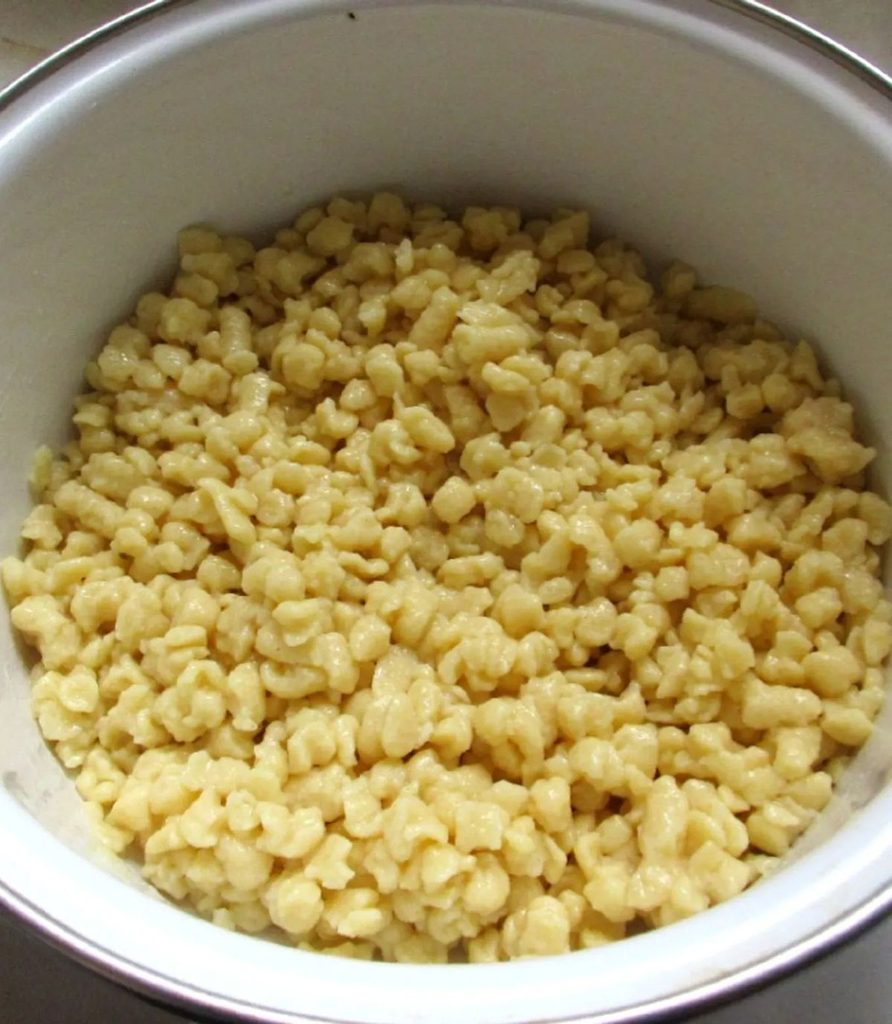
Hungarian Nokedli Dumplings, also known as Galuska, are one of Hungary’s most beloved traditional side dishes. These soft, tender, homemade egg dumplings are made with just a few simple ingredients and are the perfect accompaniment to rich Hungarian Chicken Paprikash, beef stews, and creamy paprika sauces.
If you’ve ever enjoyed a traditional Hungarian family dinner, you probably remember the comforting taste of freshly made Nokedli covered in delicious homemade gravy.
Imagine Grandma standing in her cozy kitchen, gently pushing soft dumpling batter through a traditional Nokedli maker into a large pot of boiling water. Within minutes, dozens of little golden dumplings rise to the surface, ready to be tossed with butter and served alongside a hearty family meal.
The beauty of Hungarian Nokedli lies in its simplicity. You don’t need expensive ingredients, complicated cooking techniques, or hours of preparation.
With flour, eggs, water, salt, and a little butter, you can prepare a classic Hungarian comfort food that has been enjoyed for generations.
Today, we’re sharing a traditional Hungarian Nokedli recipe with easy step-by-step instructions, helpful cooking tips, and the secrets to making perfectly soft and tender dumplings every time.
What Are Hungarian Nokedli Dumplings?
Nokedli are small, irregularly shaped Hungarian egg dumplings prepared from a simple batter of flour, eggs, water, and salt.
Unlike traditional pasta dough, Nokedli batter is soft, sticky, and does not require rolling or kneading.
Instead, the batter is pushed through a special dumpling grater or scraped into boiling water, creating small, tender dumplings.
Once cooked, they have a wonderfully soft texture with a slight chewiness.
Hungarian Nokedli are closely related to German and Austrian Spätzle, although the exact shape and preparation methods can vary.
In Hungary, Nokedli are especially famous as the traditional accompaniment to Chicken Paprikash (Csirkepaprikás).
Their delicate texture is ideal for absorbing the rich, creamy paprika sauce.
They are also commonly served with Hungarian pork stew, beef Pörkölt, and other hearty traditional dishes.
Why You’ll Love This Hungarian Nokedli Recipe
- Traditional Hungarian comfort food: A classic homemade dish enjoyed for generations.
- Simple ingredients: Made with flour, eggs, water, salt, and butter.
- Quick and easy: Ready in approximately 20–25 minutes.
- Soft, tender texture: Delicious little dumplings that absorb sauces beautifully.
- Budget-friendly: Made with inexpensive pantry staples.
- No yeast required: No rising time or complicated preparation.
- Perfect for family dinners: A comforting side dish everyone can enjoy.
- Versatile: Delicious with Chicken Paprikash, stews, creamy mushrooms, and traditional Hungarian meals.
Recipe Overview
- Preparation Time: 10 minutes
- Cooking Time: 10–15 minutes
- Total Time: Approximately 20–25 minutes
- Servings: 4–6
- Difficulty: Easy
- Cuisine: Hungarian
- Course: Side Dish
- Cooking Method: Boiling
Ingredients for Traditional Hungarian Nokedli
One of the best things about Nokedli is that you only need a handful of everyday ingredients.
Main Ingredients
- 2½ cups (300 g) all-purpose flour
- 2 large eggs
- ⅔–¾ cup (160–180 ml) water, as needed
- ½ teaspoon salt
- 2 tablespoons (30 g) unsalted butter, for serving
For Cooking
- A large pot of water
- 1–2 teaspoons salt
Optional Garnish
- Fresh parsley, finely chopped
- Freshly ground black pepper
- Additional melted butter
Ingredient tip: The exact amount of water depends on the size of your eggs and the flour you use. The batter should be thick and sticky but soft enough to pass through a traditional Nokedli maker.
How to Make Traditional Hungarian Nokedli Dumplings
Follow these simple steps to prepare beautifully soft and tender Hungarian egg dumplings.
Step 1: Bring the Water to a Boil
Fill a large pot with water and place it over high heat.
Add approximately 1–2 teaspoons of salt.
Bring the water to a rolling boil.
Starting the water before preparing the batter helps save time and ensures the dumplings can be cooked immediately.
Use a large pot so the dumplings have enough room to move freely without sticking together.
Step 2: Prepare the Egg Mixture
Crack the eggs into a large mixing bowl.
Add 160 ml of water and ½ teaspoon of salt.
Using a whisk or fork, beat until the eggs and water are completely combined.
The eggs help give traditional Nokedli their tender texture and slightly golden color.
Step 3: Add the Flour
Gradually add the all-purpose flour to the egg mixture.
Using a wooden spoon or sturdy spatula, stir until a thick, sticky batter forms.
The batter should be softer than bread dough but thicker than pancake batter.
If it feels too stiff, add the remaining water one tablespoon at a time.
Mix only until the ingredients are combined.
Grandma’s secret: Avoid overmixing the batter. Too much mixing can develop excess gluten and make the finished dumplings tough instead of tender.
Step 4: Check the Batter Consistency
Lift a spoonful of batter above the mixing bowl.
The batter should slowly fall from the spoon in thick, sticky ribbons.
It should not pour like a liquid.
If the batter is too thin, stir in a small amount of flour.
If it is too thick, add a little water.
Getting the consistency right is one of the most important steps when making traditional Hungarian Nokedli.
Step 5: Shape the Dumplings
Place a traditional Nokedli maker or Spätzle press over the pot of boiling water.
Spoon a portion of the prepared batter into the tool.
Using the scraper, gently push the batter through the holes into the boiling water.
Small pieces of batter will fall into the water, forming the characteristic irregular dumpling shapes.
Work in small batches to prevent overcrowding.
No Nokedli maker? You can use a large-hole colander or scrape small pieces of dough from a cutting board into the water with a knife.
Step 6: Cook Until the Dumplings Float
Allow the dumplings to cook in the boiling water.
After a short time, they will begin rising to the surface.
Once they float, continue cooking for approximately 1–2 minutes until the centers are completely cooked.
Most small batches take approximately 2–4 minutes.
You can remove one dumpling and cut it open to check whether the center is cooked through.
Avoid overcooking, as this can make Nokedli overly soft.
Step 7: Remove and Drain
Using a slotted spoon or spider strainer, carefully remove the cooked dumplings from the pot.
Transfer them to a colander and allow the excess water to drain.
Repeat the process with the remaining batter.
If necessary, gently separate any dumplings that have stuck together.
Step 8: Toss With Melted Butter
Place the cooked Nokedli in a warm serving bowl.
Add the butter and toss gently until the dumplings are evenly coated.
The butter enhances their flavor and helps prevent them from sticking together.
For extra freshness, sprinkle with finely chopped parsley.
Step 9: Serve Warm
Your homemade Hungarian Nokedli are ready to enjoy!
Serve them immediately alongside Hungarian Chicken Paprikash, beef Pörkölt, mushroom paprikash, or your favorite traditional Hungarian stew.
Their soft texture makes them absolutely delicious when covered with rich, flavorful gravy.
Grandma’s Secrets for Perfect Hungarian Nokedli
Although traditional Nokedli require only a few ingredients, small details can make a big difference.
1. Use Fresh Eggs
Eggs provide structure, richness, and a beautiful golden color.
Using fresh eggs helps create flavorful, tender dumplings.
2. Don’t Make the Batter Too Thick
The batter should remain soft enough to pass through the dumpling maker easily.
Excessively thick batter can produce heavy dumplings.
3. Avoid Overmixing
Unlike bread dough, Nokedli batter does not need kneading.
Mix gently until the ingredients are just combined.
4. Use Plenty of Boiling Water
The dumplings need enough space to cook evenly.
A large pot helps prevent sticking and makes cooking easier.
5. Work in Small Batches
Adding too many dumplings at once can lower the water temperature.
Small batches cook quickly and consistently.
6. Don’t Overcook
The dumplings should be tender with a slight bite.
Remove them shortly after they float and are cooked through.
7. Add Butter Immediately
Tossing warm dumplings with butter prevents clumping and gives them a delicious homemade flavor.
8. Serve With Plenty of Sauce
Hungarian Nokedli are especially delicious when paired with rich paprika-based sauces.
Their irregular shapes are perfect for holding onto creamy gravy.
What to Serve With Hungarian Nokedli
Hungarian Nokedli are incredibly versatile and pair beautifully with many traditional dishes.
Hungarian Chicken Paprikash (Csirkepaprikás)
This is perhaps the most famous combination.
Tender chicken is slowly cooked in a rich Hungarian paprika sauce and finished with sour cream.
The Nokedli absorb the creamy sauce, creating an incredibly comforting family meal.
Hungarian Beef Pörkölt
Traditional Hungarian beef Pörkölt is a hearty paprika-based stew.
The tender meat and rich gravy taste wonderful served over fresh homemade Nokedli.
Hungarian Pork Stew
Pork simmered with onions, paprika, and garlic makes another excellent accompaniment.
Hungarian Mushroom Paprikash
For a meat-free meal, serve the dumplings with mushrooms cooked in a creamy paprika sauce.
Creamy Sour Cream Sauce
Toss warm Nokedli with sour cream, butter, and fresh herbs for a simple, satisfying dish.
Hungarian Cucumber Salad
A refreshing cucumber salad provides a delicious contrast to rich Hungarian stews and dumplings.
Traditional Hungarian Egg Nokedli (Tojásos Nokedli)
One of Hungary’s most beloved ways to enjoy these dumplings is Tojásos Nokedli, which means egg Nokedli.
This comforting dish combines freshly cooked Hungarian dumplings with lightly scrambled eggs.
It is particularly popular during spring and is traditionally served with a refreshing lettuce salad.
Additional Ingredients
- 4 large eggs
- 1 tablespoon butter or vegetable oil
- Salt, to taste
- Freshly ground black pepper
How to Make Tojásos Nokedli
- Prepare the Nokedli according to the main recipe.
- Heat the butter in a large skillet over medium heat.
- Add the cooked dumplings and warm them gently.
- Beat the additional eggs with salt and pepper.
- Pour the beaten eggs over the dumplings.
- Stir gently until the eggs are fully cooked and evenly coat the Nokedli.
- Serve immediately with a fresh Hungarian lettuce salad.
This simple variation transforms traditional Nokedli from a side dish into a satisfying main meal.
Common Mistakes to Avoid
Why Are My Nokedli Too Hard?
The batter may contain too much flour or may have been mixed excessively.
Use the recommended proportions and stir only until combined.
Why Are My Dumplings Falling Apart?
The batter may be too thin.
Add a small amount of flour to create a thicker, stickier consistency.
Why Are My Nokedli Too Large?
If you’re shaping the dumplings by hand, you may be dropping overly large portions into the water.
Use a traditional Nokedli maker or work with smaller pieces of batter.
Why Are My Dumplings Sticking Together?
The pot may be overcrowded, or the dumplings may have been left sitting without butter after cooking.
Cook in batches and toss with melted butter immediately.
Why Are My Nokedli Mushy?
The dumplings may have been overcooked.
Remove them once they float and the centers are fully cooked.
Why Does My Batter Feel Too Sticky?
Nokedli batter is supposed to be sticky.
Unlike bread or pasta dough, it should not be firm enough to knead or roll.
Delicious Hungarian Nokedli Variations
Garlic Butter Nokedli
Melt butter in a skillet and gently sauté minced garlic.
Toss with cooked dumplings for a fragrant side dish.
Cheese Nokedli
Add grated cheese to the hot dumplings and stir until melted.
This creates a rich and comforting variation.
Paprika Butter Nokedli
Melt butter, remove from heat, and stir in a small amount of sweet Hungarian paprika.
Toss the dumplings in the fragrant paprika butter.
Herb Nokedli
Add freshly chopped parsley, chives, or dill to the batter before cooking.
Mushroom Nokedli
Combine the dumplings with sautéed mushrooms, butter, and sour cream.
Crispy Pan-Fried Nokedli
Heat leftover cooked dumplings in a buttered skillet until lightly golden.
The outside becomes slightly crisp while the inside remains tender.
How to Store and Reheat Hungarian Nokedli
Although Nokedli taste best immediately after cooking, leftovers can be stored for later meals.
Refrigerator Storage
Allow the cooked dumplings to cool promptly.
Transfer them to an airtight container.
Refrigerate at 40°F (4°C) or below for up to 3–4 days.
A small amount of butter helps keep the dumplings from sticking.
Freezer Storage
Spread the cooled dumplings on a parchment-lined baking sheet.
Freeze until firm, then transfer to a freezer-safe container or bag.
For the best quality, use within approximately 2 months.
How to Reheat Nokedli
Heat a little butter in a skillet over medium heat.
Add the cooked dumplings and stir gently until heated thoroughly.
Alternatively, warm the dumplings briefly in simmering water, then drain well.
Frequently Asked Questions About Hungarian Nokedli
What Are Hungarian Nokedli Made Of?
Traditional Hungarian Nokedli are made from flour, eggs, water, and salt.
Butter is commonly added after cooking for extra flavor.
Are Nokedli and Galuska the Same Thing?
The words Nokedli and Galuska are often used interchangeably in Hungarian cooking to describe small homemade dumplings, although regional usage can vary.
Are Hungarian Nokedli the Same as German Spätzle?
They are closely related.
Both are made from a simple egg-based batter and cooked in boiling water.
Their shapes and preparation techniques can differ.
Do You Need a Special Tool to Make Nokedli?
No.
Although a traditional Nokedli maker makes the process easier, you can use a large-hole colander or shape small pieces by hand.
Can You Make Nokedli Without Eggs?
Yes, egg-free versions are possible using flour and water, although the texture and flavor will differ from traditional egg dumplings.
Can I Use Milk Instead of Water?
Yes.
Some recipes use milk or a combination of milk and water.
However, water is a simple and traditional choice.
Do Nokedli Need Baking Powder?
No.
Traditional Nokedli do not require baking powder or yeast.
How Long Do Hungarian Nokedli Take to Cook?
Small dumplings generally cook in approximately 2–4 minutes, depending on their size.
They are ready when they float and the centers are fully cooked.
What Is the Best Sauce for Hungarian Nokedli?
Creamy Hungarian Chicken Paprikash sauce is one of the most traditional and popular choices.
Beef Pörkölt gravy and mushroom paprika sauce are also delicious.
Can I Make Nokedli Ahead of Time?
Yes.
Cook the dumplings, toss with butter, and refrigerate promptly.
Reheat gently before serving.
The History of Hungarian Nokedli
Hungarian Nokedli are part of the rich tradition of simple, comforting Central European cooking.
Similar small egg dumplings have been prepared for generations in Hungary, Austria, Germany, and neighboring countries.
In Hungarian home cooking, Nokedli became especially popular because the ingredients were inexpensive and widely available.
Flour, eggs, water, and salt could be transformed into a filling side dish in just a few minutes.
The dumplings were particularly well suited to Hungarian paprika-based dishes.
Their soft, irregular shapes made them perfect for absorbing flavorful sauces from Chicken Paprikash and hearty meat stews.
Over time, Nokedli became a familiar part of Hungarian family meals.
In traditional kitchens, dumpling batter was often scraped directly into boiling water using a board and knife.
Today, many home cooks use a special dumpling grater that makes the process faster and easier.
Despite these modern conveniences, the essential recipe remains remarkably simple.
For many Hungarian families, Nokedli continue to represent the warmth and familiarity of homemade cooking.
Why Hungarian Families Love Nokedli
One of the most wonderful things about Hungarian Nokedli is how naturally they bring comfort to the dinner table.
They are not an elaborate dish requiring expensive ingredients.
Instead, they demonstrate how simple pantry staples can become something truly satisfying.
A bowl of freshly cooked Nokedli covered in rich Chicken Paprikash sauce can turn an ordinary family dinner into a memorable meal.
They are also a practical choice for busy households.
Because the batter takes only minutes to prepare, Nokedli can be made while a stew or paprika sauce finishes cooking.
Every family may have its own preferred consistency, preparation method, or serving style.
Some prefer smaller dumplings.
Others enjoy slightly larger, chewier pieces.
And many believe that a generous spoonful of butter is the secret to perfect Nokedli.
These small differences are part of the charm of traditional Hungarian home cooking.
Final Thoughts
Traditional Hungarian Nokedli Dumplings (Galuska) are a simple, delicious, and comforting side dish that deserves a place in every collection of authentic Hungarian-inspired recipes.
Made with only a few everyday ingredients, these soft homemade egg dumplings are wonderfully versatile and incredibly satisfying.
Whether served with rich Chicken Paprikash, hearty beef Pörkölt, creamy mushroom sauce, or scrambled eggs as Tojásos Nokedli, they bring warmth and traditional Hungarian flavor to any meal.
The recipe is easy enough for beginners and quick enough for busy family dinners.
Once you discover how delicious freshly prepared Nokedli can be, you’ll understand why these humble dumplings have remained a beloved part of Hungarian cuisine for generations.
Try this traditional recipe and bring the comforting flavors of a Hungarian family kitchen into your own home.
Did your grandmother make homemade Hungarian Nokedli? Do you prefer them with Chicken Paprikash or scrambled eggs? And did your family use a Nokedli maker or the traditional knife-and-board method? Share your favorite Hungarian food memories in the comments below!
If you enjoyed this recipe, save it for later and share it with someone who loves traditional homemade comfort food.
SEO Information for Blogger
SEO Title: Hungarian Nokedli Dumplings (Galuska) – Traditional Homemade Recipe
Meta Description: Learn how to make traditional Hungarian Nokedli Dumplings with flour, eggs, and water. Soft homemade egg dumplings perfect for Chicken Paprikash.
URL Slug: hungarian-nokedli-dumplings-galuska-recipe
Focus Keyword: Hungarian Nokedli Dumplings
Secondary Keywords: Hungarian Nokedli recipe, traditional Hungarian dumplings, Galuska recipe, Hungarian egg dumplings, homemade Nokedli, Hungarian Spätzle, easy Hungarian side dishes, Chicken Paprikash dumplings, Tojásos Nokedli, authentic Hungarian recipes, Hungarian comfort food.
Image Alt Text: Traditional Hungarian Nokedli Dumplings Galuska served in a rustic bowl with melted butter and fresh parsley, soft homemade Hungarian egg dumplings.
Suggested Blog Categories: Hungarian Recipes, Traditional Hungarian Food, Side Dishes, Easy Homemade Recipes, European Comfort Food.